Slow plasticity
Shared Core LoRA
Reusable cross-task low-rank memory for stable knowledge that should survive across tasks.
A future-aware continual learning method that treats LoRA capacity as a structural decision, not a fixed adapter budget.
NH-LoRA is framed around the stability-plasticity pressure in rehearsal-free continual learning.
Class-incremental systems must absorb new classes without revisiting old task data, making stability and plasticity hard to balance.
A fixed low-rank budget can be too rigid when task novelty, conflict, and retention pressure change over time.
NH-LoRA models when to reuse shared memory, expand task slots, open new capacity, and consolidate stable updates.
The method separates reusable memory, task-specific plasticity, per-instance routing, and future-aware planning.
Reusable cross-task low-rank memory for stable knowledge that should survive across tasks.
Task-specific slots that can grow when the planner sees novelty or conflict evidence.
Sparse per-sample slot activation to reduce inter-slot interference at inference time.
A future-aware controller that predicts novelty, conflict, rank budget, and consolidation signals.
Numbers below come from the migrated project logs and remain presented as reported artifacts, not final paper claims.
Custom Dataset
2
Ready for final benchmark values.
Deployment reported top average
71.20%
Paired with reported forgetting metric.
Tracked benchmark groups
3
CIFAR-100, ImageNet-A, and Custom dataset for Deployment.
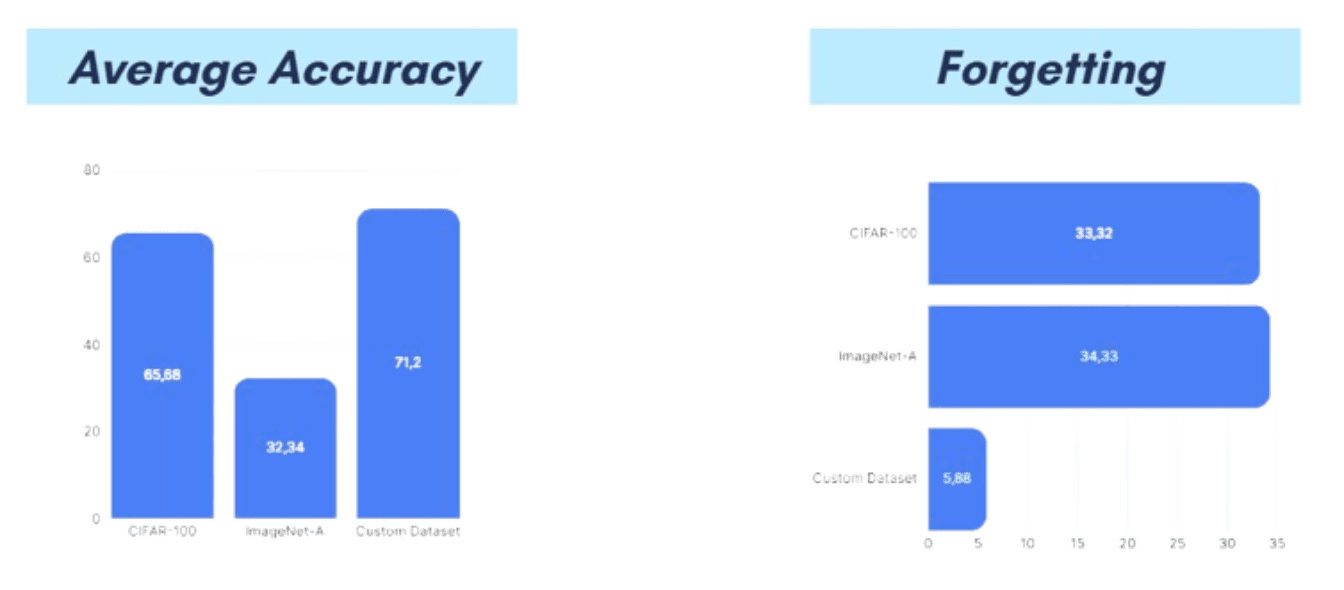
Compare benchmark groups, config changes, and task-level metrics.
The public demo is linked externally while this site explains the method, artifacts, and known limitations around it.
Read the compiled paper PDFs with language-specific paper asset switching.
Jump into the demo, paper, experiment logs, or source repository.